💳 Pay Now |
✍️ Learning Center

Protect your food brand name and logo before a competitor does. SetupFiling helps dairy, meat, edible oil and processed-food businesses file their Class 29 trademark application with the Trademark Registry, India.
Class 29 Trademark Filing
Meat, Fish, Poultry, Milk, Fruits & Edible Oils
Professional fee, exclusive of government fee. Govt fee applicable is ₹4,500 per class for individuals/MSME/startups (₹9,000 for other applicants) as per the Trade Marks Rules, 2017.
Secure payment via Razorpay · Order confirmation on WhatsApp & Email
Understanding Class 29
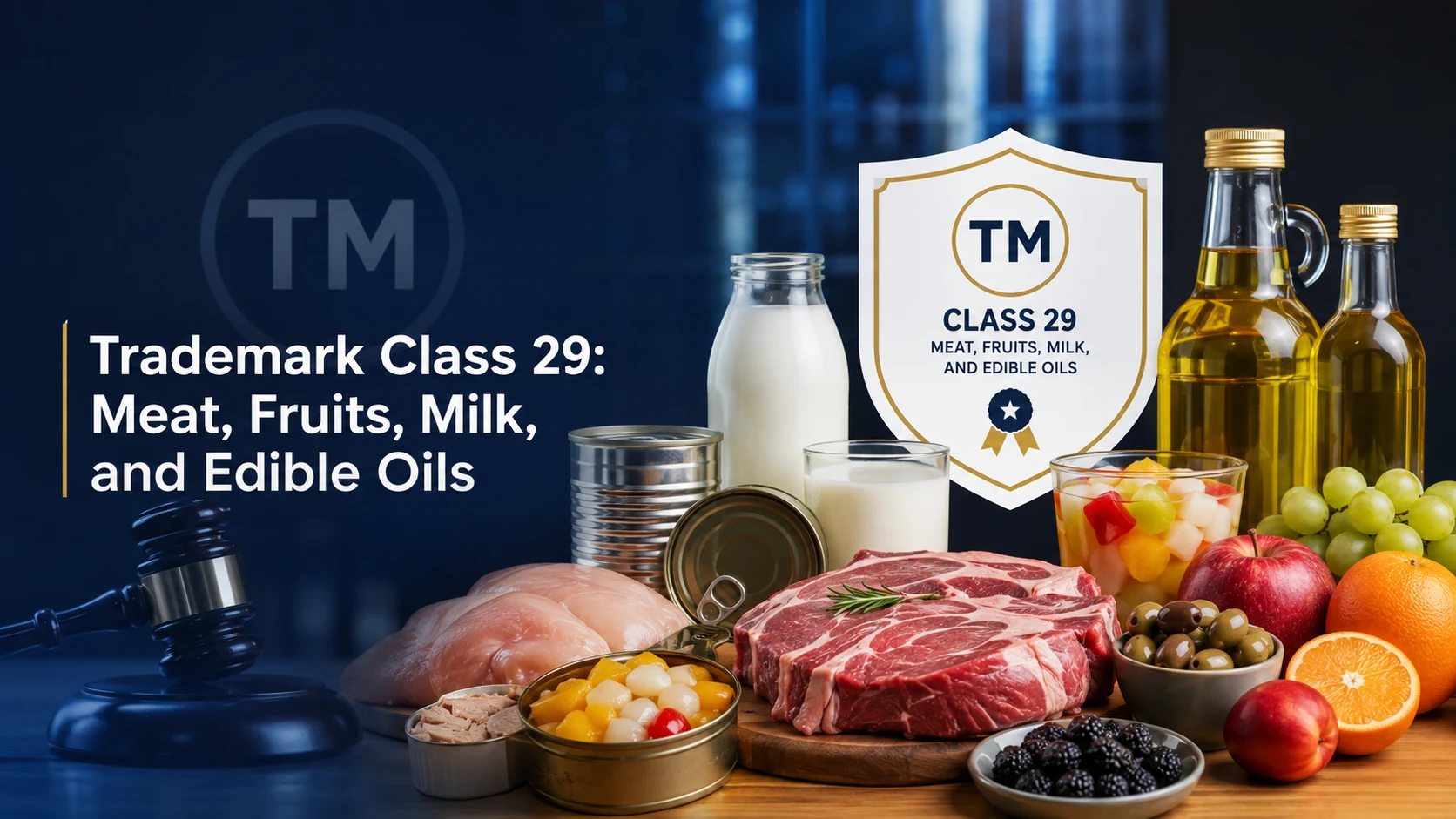
Trademark Class 29, under the NICE Classification followed by the Indian Trademark Registry, covers processed and preserved food products of animal origin along with select processed plant-based foods. It is one of the most frequently filed classes among India's food, dairy and agro-processing businesses because it protects brand names used on packaging, labels and marketing for everyday grocery items.
If you are you are you are launching a packaged milk, ghee, paneer, cold-pressed oil, pickle, frozen meat, or preserved fruit brand, registering your name and logo under Class 29 stops competitors from copying your identity and gives you the exclusive right to use the ® symbol once registration is granted. For a wider view of how the overall system works, see this complete guide to trademark registration in India.
Class 29 is often filed alongside other consumer-facing classes. If you also sell kitchen accessories or want to protect your brand for retail and distribution, review Class 21 for kitchenware and household glass products or Class 35 for retail, distribution and marketing services.
Scope of Protection
Class 29 is broad and covers most processed, preserved and packaged foods of animal origin, plus several processed plant-based categories. Typical goods filed under this class include:
Fresh, frozen, cured and processed meat; poultry; game meat; sausages and meat extracts.
Fish, shellfish and other seafood in fresh, frozen, dried, smoked or preserved form.
Milk, ghee, butter, paneer, curd, cheese and other dairy-based products and substitutes.
Preserved, dried, frozen or cooked fruits and vegetables; jams, jellies, compotes and pickles.
Cooking oils, cold-pressed oils, vegetable fats and edible fats used in food preparation.
Eggs and egg-based food preparations sold in retail or bulk packaging.
Not sure whether your product fits Class 29 or another category? Read about word marks, logos and the different types of trademarks explained, or compare with Class 3, which covers cosmetics, soaps and personal care products.
Who Needs This
Class 29 registration is relevant for a wide range of Indian food businesses, including dairy farms and milk processing units, meat and poultry exporters, cold-pressed and refined edible oil manufacturers, packaged fruit and pickle brands, D2C and quick-commerce food startups, and marketplace sellers listing packaged food items. If you also sell on online marketplaces, our guide on how online sellers can register a brand name before listing products may help.
Most food manufacturing and packaging businesses also need an FSSAI licence alongside a trademark. See the FSSAI food licence requirements for packaged food brands, and if you export processed meat, fruits or agro-based products, check the APEDA registration process required for food exporters. Dairy businesses planning bank funding can also refer to our note on preparing a bank-ready project report for a dairy unit.
Business Benefits
Only you can use your brand name and logo on meat, dairy, oil or fruit products anywhere in India.
Food packaging is frequently imitated. Registration gives you legal grounds to act against lookalike brands.
A registered mark alongside FSSAI compliance signals authenticity to retailers, distributors and buyers.
Once registered, you can display the ® symbol on labels, invoices and marketing material.
A registered trademark can be licensed, franchised or valued as an intangible business asset.
Take infringement action anywhere in India instead of relying only on local or state-level protection.
The Process
We check the IP India trademark database under Class 29 to confirm your brand name or logo is not already registered or similar to an existing mark.
You share your brand name, logo, applicant details and business proof; our team drafts the Form TM-A application under the correct Class 29 goods description.
The application is filed online with the Trade Marks Registry, and you receive an application number that allows immediate use of the ™ symbol.
The Registry examines the application for conflicts or objections. If an objection is raised, our team prepares and files the response on your behalf.
Once cleared, your mark is published in the Trademark Journal for four months, allowing third parties to raise opposition if any.
If no opposition is filed, the Registry issues the Trademark Registration Certificate and you can begin using the ® symbol on your food products.
For a broader walkthrough with timelines, see our step-by-step trademark filing procedure. To verify availability yourself first, you can also run a free public search on the IP India portal.
Before You Apply
Transparent Pricing
The total cost of filing has two parts: a one-time professional fee charged by SetupFiling, and the statutory government fee paid to the Trade Marks Registry per class.
| Component | Applicant Type | Amount |
|---|---|---|
| SetupFiling Professional Fee | All applicants | ₹1,999 |
| Government Fee (per class) | Individual / MSME / Startup | ₹4,500 |
| Government Fee (per class) | Company / LLP / Others | ₹9,000 |
For a complete comparison across all applicant categories and services, see the detailed breakup of government and professional fees. Once registered, remember that a mark must be renewed periodically — read more about renewing your mark every ten years.
Explore Further
Common Questions
Trademark Class 29 protects brand names and logos used on processed foods such as meat, fish, poultry, milk and dairy products, edible oils and fats, and preserved or processed fruits and vegetables.
With SetupFiling, the professional fee is ₹1,999 plus the government fee, which is ₹4,500 per class for individuals, MSMEs and startups, and ₹9,000 per class for other applicants such as companies and LLPs.
The application is typically filed within 1–2 working days. If there are no objections or oppositions, full registration usually takes 12 to 18 months, though the ™ symbol can be used as soon as the application is filed.
Yes. A trademark protects your brand identity, while an FSSAI licence is a separate legal requirement for manufacturing, packaging or selling food products in India.
You typically need your brand logo, PAN card, address proof, business registration proof such as GST or Udyam, and a signed Power of Attorney (Form TM-48), which SetupFiling provides.
Yes, since both fall under Class 29, a single application filed under this class can cover multiple goods within the class, such as meat products, milk products and edible oils, as long as they are correctly listed in the specification.
The Trademark Registry issues an examination report explaining the objection. A written response must be filed within one month, and our team handles this drafting and filing as part of ongoing support.
A registered trademark is valid for 10 years from the date of registration and can be renewed indefinitely for further 10-year periods before expiry.
Start with a free trademark availability search and get your Class 29 application filed by our team.