
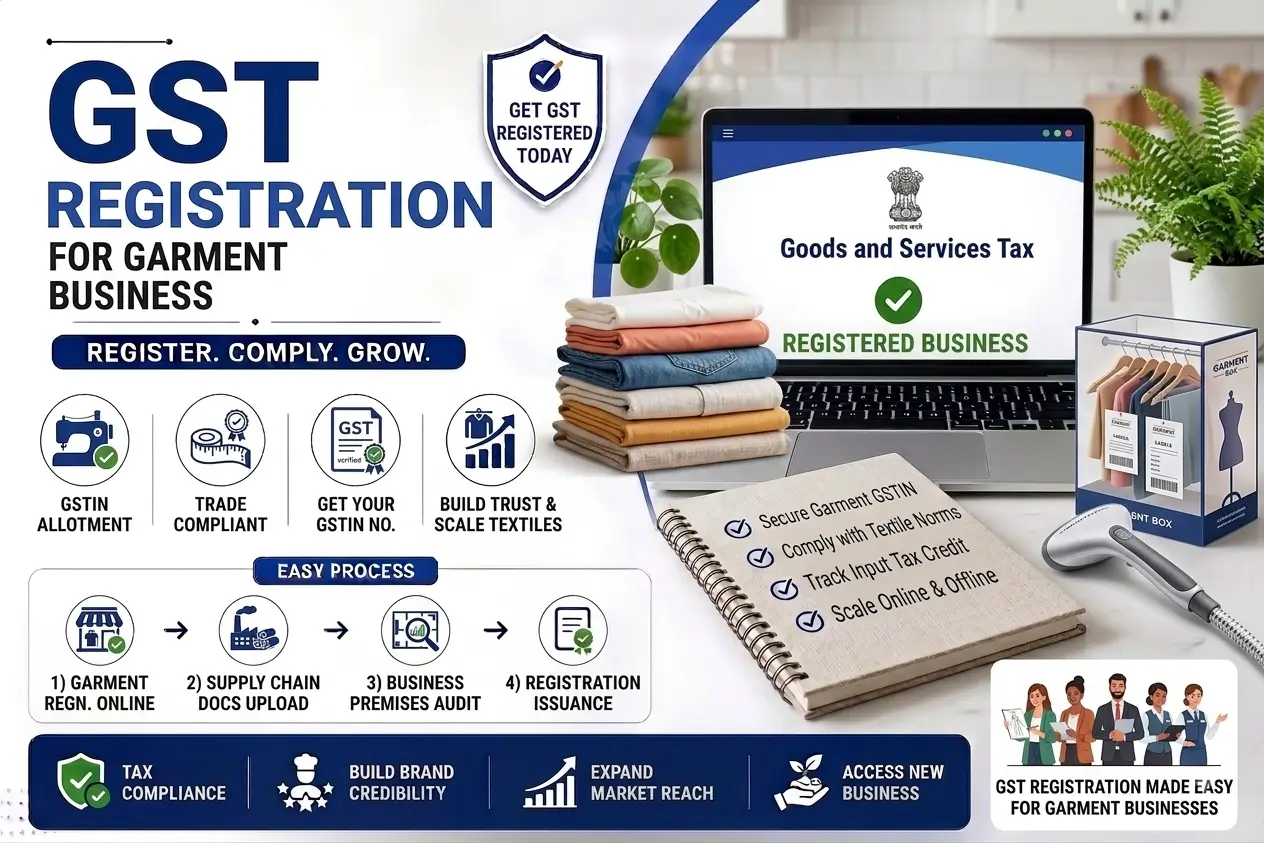
Why Garment and Apparel Businesses Need GST Registration
The garment trade runs on thin margins and a long supply chain — fabric suppliers, job-work tailoring units, wholesalers, and retail outlets all sit between raw material and the final sale. GST registration lets a business at any point in that chain claim input tax credit on fabric, trims, and job-work charges, instead of that tax simply adding to cost. It also becomes non-negotiable once turnover crosses the threshold, once you supply outside your state, or the moment you want to list your clothing brand on Amazon, Flipkart, Meesho, or Myntra, all of which require a valid GSTIN before onboarding a seller account.
We register proprietorship boutiques, partnership-run wholesale units, and private limited apparel brands alike. If you're the sole owner of your store, see our guide on GST registration for an individual proprietor; if you run the business with partners, GST registration for a partnership firm covers the exact paperwork needed. Once approved, you'll receive the same GST registration certificate that any registered business gets, which most B2B garment buyers will ask to see before placing a bulk order.
GST Rates Garment Sellers Should Know
Apparel is one of the few categories where the GST rate depends on the sale price of the individual piece, not the material or brand — this trips up a lot of first-time sellers when they're pricing invoices.
| Garment / Apparel Item | Sale Price | GST Rate |
|---|---|---|
| Ready-made garments, apparel | Up to ₹1,000 per piece | 5% |
| Ready-made garments, apparel | Above ₹1,000 per piece | 12% |
| Raw fabric, textile yarn | Any value | 5% (most categories) |
| Job-work on garment manufacturing | Per job-work contract | 5% (in most cases) |
Rates and slabs are revised from time to time by the GST Council, so always confirm the current applicable rate for your specific HSN code at the time of filing.
Documents Needed to Register a Garment Business Under GST
- PAN card and Aadhaar card of the proprietor, partners, or directors
- Passport-size photograph
- Address proof of your shop, showroom, or warehouse — electricity bill, rent agreement, or property tax receipt
- Bank account statement, passbook copy, or cancelled cheque
- Digital signature certificate, for companies and LLPs
For a complete document checklist mapped to your exact business type, see our GST registration documents guide.