💳 Pay Now |
✍️ Learning Center

Received a trademark examination report citing Section 11 for being similar to an existing mark? Understand why it happens and how to file a strong online reply, guided by Trademark Attorneys with 15+ years of expertise.
Trademark Registration Package
₹1999+ Govt. Fee ₹4500
Already facing a Section 11 objection? WhatsApp us for a reply quote
Chat on WhatsApp: +91 98182 09246A Section 11 objection is one of the most common reasons a trademark application faces resistance in India. Unlike a Section 9 objection, which questions whether your mark is distinctive on its own, a Section 11 objection arises because the Trademark Examiner has found an existing registered or pending mark that is identical or deceptively similar to yours, and believes it could cause confusion among consumers. Responding correctly with a well-structured online reply can be the difference between your application moving forward or being refused.
Setupfiling.in is an online professional business services platform founded by experienced Chartered Accountants, Company Secretaries, and Trademark Attorneys with 15+ years of combined expertise. We have helped 50,000+ entrepreneurs and businesses across India respond to trademark objections, including Section 11 similar mark objections, with legally sound, evidence-backed replies filed directly on the Trademark Registry's online portal.
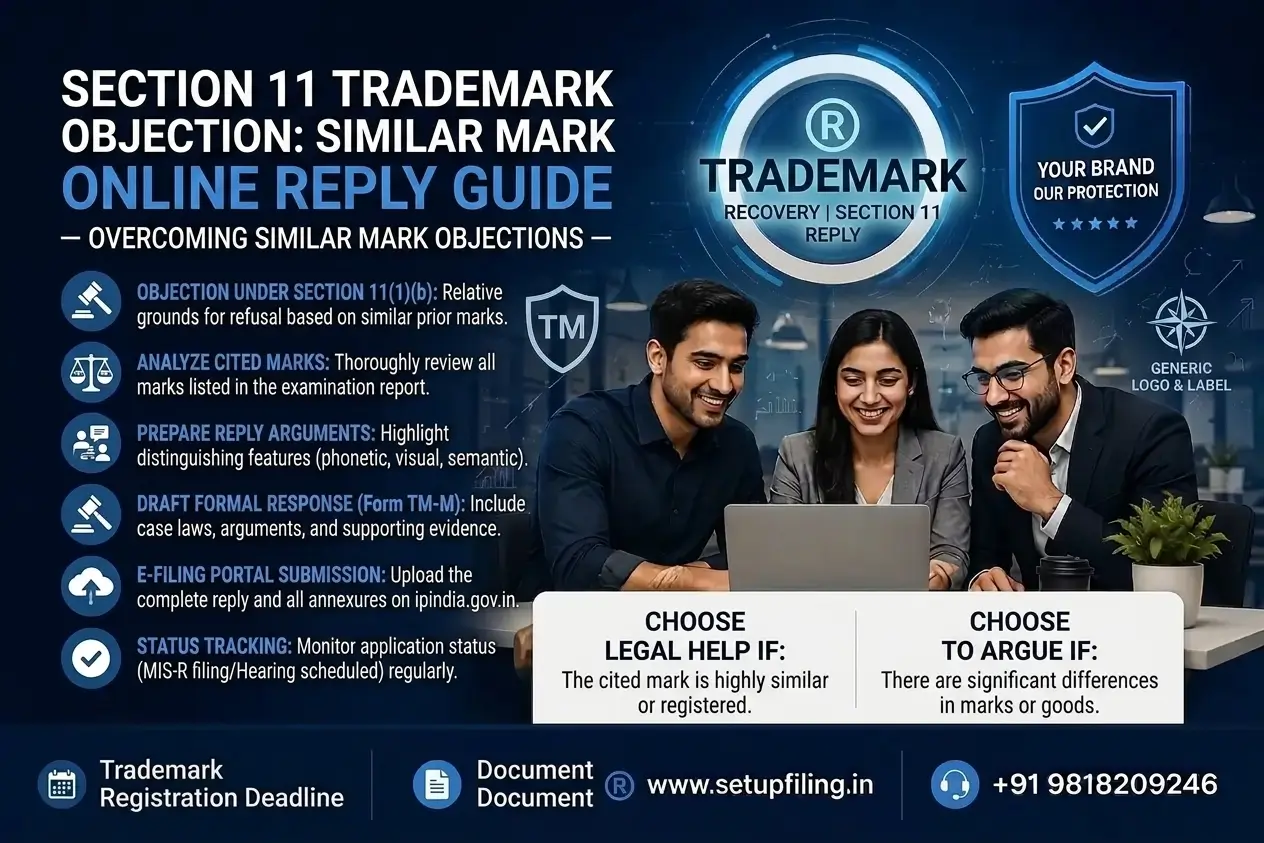
This guide explains what Section 11 covers, why examiners cite it, how to build a strong reply, what evidence helps your case, and how to get expert help from Setupfiling.in.
Section 11 of the Trade Marks Act, 1999 lists the "relative grounds for refusal" of trademark registration, meaning objections based on conflict with an existing mark rather than a problem with your mark on its own. Under Section 11, an application can be objected to if the mark is identical or similar to an earlier registered or pending trademark, and covers identical or similar goods or services, creating a likelihood of confusion among the public. Section 11 also protects well-known trademarks even across dissimilar goods or services in certain circumstances.
| Aspect | Section 9 (Absolute Grounds) | Section 11 (Relative Grounds) |
|---|---|---|
| Basis of Objection | Problem with the mark itself, such as lack of distinctiveness | Conflict with an existing earlier registered or pending mark |
| Focus of Examination | Whether the mark can function as a brand identifier at all | Whether the mark is confusingly similar to a specific cited mark |
| Typical Reply Strategy | Prove inherent or acquired distinctiveness | Distinguish from the cited mark or show no likelihood of confusion |
Marks that sound alike when spoken, even if spelled differently, are commonly flagged for likelihood of confusion.
Marks that look similar in overall structure, letters, or design elements to an already registered mark.
Marks that convey the same idea or meaning as an existing mark, even with different wording.
Marks filed under the same or closely related class covering similar goods or services as the cited mark.
Argue and demonstrate visual, phonetic, and conceptual differences between your mark and the cited mark, even where some surface similarity exists.
Where the cited mark covers different or unrelated goods and services, or reaches customers through entirely different trade channels, argue that confusion is unlikely.
If you can obtain a no-objection or consent letter from the owner of the cited mark, this significantly strengthens the reply and can resolve the objection.
If you have genuinely and honestly used your mark independently for a significant period, this can support an argument for concurrent registration.
Evidence that you adopted and used your mark before the cited mark's priority date can support your claim to registration.
In some cases, arguing that the cited mark's actual use is narrower than its registered scope can help reduce the perceived overlap.
Examine the examination report to identify the exact mark(s) cited, their registered classes, and the goods or services they cover.
Analyse visual, phonetic, and conceptual similarities and differences between your mark and each cited mark.
Draft legal arguments supported by evidence of distinctiveness, prior use, differing trade channels, or a consent letter where available.
Submit the written reply and supporting evidence through the Trademark Registry's online portal within 30 days of the examination report.
If the examiner remains unconvinced by the written reply, a hearing may be scheduled to present arguments and evidence before a final decision.
A trademark application is generally given 30 days from the date of the examination report to file a reply. If no reply is filed within this window, the application is treated as abandoned, meaning you lose your original filing date and priority, and would need to file a completely fresh application, along with fresh government fees, to attempt registration again.
Keep the following details ready before you reach out. This helps our trademark attorneys draft a strong, well-supported reply.
Setupfiling.in is built by Chartered Accountants, Company Secretaries, and Trademark Attorneys who understand exactly how the Trademark Registry evaluates similarity and likelihood of confusion, helping you build a reply that stands the best chance of acceptance without unnecessary delays.
A Section 11 objection is one of several stages in the trademark journey. Explore other related services our clients commonly need:
It means the Trademark Examiner has found an existing registered or pending mark that is identical or deceptively similar to yours, covering the same or related goods or services, creating a possible likelihood of confusion.
Section 9 objections concern a problem with the mark itself, such as lack of distinctiveness, while Section 11 objections arise because of conflict with a specific existing earlier mark cited by the examiner.
No. It is an opportunity to file a reply distinguishing your mark from the cited mark or otherwise showing that confusion is unlikely, before a final decision is made.
A consent letter is a no-objection letter from the owner of the cited mark, confirming they have no issue with your registration. Submitting one can significantly strengthen your reply and often resolves the objection.
Honest concurrent use refers to a situation where you have genuinely and independently used your mark for a significant period without intending to copy the cited mark, which can support an argument for allowing both marks to coexist.
A reply must generally be filed within 30 days from the date of the examination report, after which the application can be treated as abandoned if no reply is submitted.
If no reply is filed within the given window, the application is treated as abandoned, meaning you lose your original filing date and would need to file a fresh application with new government fees.
Yes, in many cases marks that are similar but cover clearly different and unrelated goods or services, reaching different customers through different trade channels, can be registered without a likelihood of confusion.
Not always. If the examiner is satisfied with the written reply and evidence, the application can proceed without a hearing, which is scheduled only if the examiner remains unconvinced.
Yes, Section 11 provides special protection to well-known trademarks, which can be cited against a new application even for dissimilar goods or services in certain circumstances.
While not legally mandatory, replying effectively requires understanding of comparative trademark analysis and case precedent, so professional assistance significantly improves the chances of a successful outcome.
For a new trademark, click "Apply Now for Trademark" to pay ₹1999 plus the applicable government fee. If you already have an application facing a Section 11 objection, message us on WhatsApp at +91 98182 09246 for a reply quote.
Objection replies drafted by Trademark Attorneys — trusted by 50,000+ businesses across India.
Chat on WhatsApp: +91 98182 09246