💳 Pay Now |
✍️ Learning Center

Register your tea, coffee, bakery, spice, snack, or confectionery brand under the correct trademark class. Filed by Chartered Accountants, Company Secretaries, and Trademark Attorneys with 15+ years of expertise.
Class 30 Trademark Package
₹1,999+ Govt. Fee ₹4,500
Filing starts within 24-48 hours of document submission
Chat on WhatsApp: +91 98182 09246If your business sells tea, coffee, bakery products, spices, sauces, snacks, or confectionery, Trademark Class 30 is almost certainly the classification your brand needs. This class covers some of the most crowded product categories in India, from packaged masalas to instant noodles, which means a proper availability search before filing matters just as much as the filing itself.
Setupfiling.in is an online professional business services platform founded by experienced Chartered Accountants, Company Secretaries, and Trademark Attorneys with 15+ years of combined expertise. We have helped 50,000+ entrepreneurs and businesses across India, including food, bakery, and spice brands, file Class 30 trademark applications correctly the first time.
This guide explains exactly what Class 30 covers, how it compares to related food and beverage classes, why distinctiveness matters so much for food brand names, the registration process, and how to place your order with Setupfiling.in.
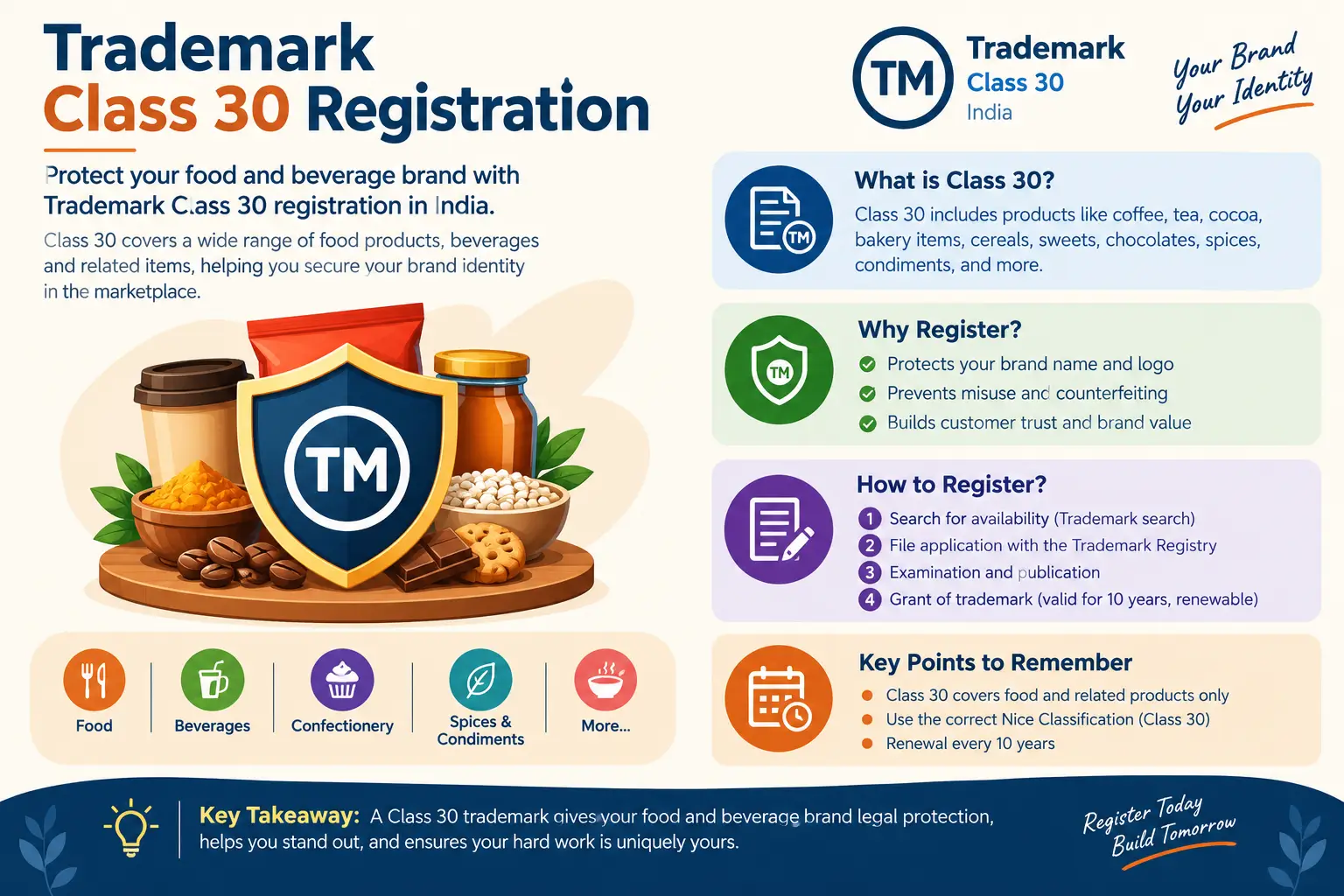
Trademark Class 30 is one of the 45 classes under the NICE Classification system used by the Indian Trademark Registry. It covers coffee, tea, cocoa, and substitutes for coffee; rice, pasta, and noodles; tapioca and sago; flour and preparations made from cereals; bread, pastry, and confectionery; chocolate; ice cream, sorbets, and other edible ices; sugar, honey, and treacle; yeast and baking powder; salt, seasonings, spices, preserved herbs, vinegar, sauces, and other condiments; and ice.
Packaged tea, coffee, and their substitutes, including instant and specialty blends.
Bread, cakes, pastries, biscuits, chocolates, and sweets sold as packaged products.
Masalas, seasonings, preserved herbs, vinegar, sauces, and other flavouring products.
Instant noodles, pasta, ready-made batters, and cereal-based convenience foods.
Packaged savoury snacks and namkeen products made primarily from cereal or flour bases.
Ice cream, kulfi, sorbets, and other edible ices sold as branded products.
Sugar, honey, treacle, and other natural sweetening products.
Flour, yeast, baking powder, and other preparations used in baking and cooking.
Food and beverage brands often need to check more than one class, since Class 30 sits alongside several closely related categories.
| Trademark Class | What It Covers | Typical Example |
|---|---|---|
| Class 30 | Tea, coffee, bakery, confectionery, spices, sauces, and cereal-based staples | A packaged spice mix, biscuit, or instant noodle brand |
| Class 29 | Meat, fish, poultry, dairy, edible oils, and processed fruits or vegetables | A packaged paneer, pickle, or ready-to-eat curry brand |
| Class 31 | Raw and unprocessed agricultural products, grains, and fresh produce | Unprocessed raw rice or grain sold in bulk before milling or packaging |
| Class 32 | Non-alcoholic beverages, mineral water, and fruit juices | A bottled juice, soft drink, or flavoured water brand |
| Class 43 | Restaurant, cafe, and food service services rather than packaged products | A cafe or bakery's dine-in and delivery service brand name |
A bakery brand that both runs a cafe and sells packaged biscuits under the same name, for example, may need registration under both Class 43 for the cafe service and Class 30 for the packaged product line to fully protect the brand.
Class 30 is one of the most heavily filed classes in India, and many food brand owners choose names that describe the product itself, such as calling a spice brand "Pure Masala" or a bakery brand "Fresh Bakes." Names like these risk a Section 9 objection for lack of distinctiveness, since the Trademark Registry generally cannot let one business monopolise purely descriptive or generic terms that competitors legitimately need to describe their own similar products.
Names that simply describe the product, like "Crispy Snacks" or "Sweet Treats," face a higher risk of objection during examination.
Invented words or suggestive names that hint at the product without directly describing it tend to clear examination more smoothly.
Given how crowded Class 30 is, a proper availability search before filing helps avoid both objections and future opposition from existing brand owners.
A search is conducted under Class 30 to check whether an identical or deceptively similar food or beverage brand name is already registered or pending.
The trademark application is filed with the Trademark Registry under Class 30, specifying the exact food products covered by the brand.
A Trademark Examiner reviews the application for distinctiveness and similarity to existing marks, and may raise an objection if issues are found.
Once accepted, the mark is published in the Trademark Journal for four months, during which any third party can file an opposition.
If no opposition is filed, or any opposition is successfully resolved, the Registry issues the trademark registration certificate.
Keep the following details ready before you place your order. This helps us file your Class 30 trademark application without delay.
Click "Apply Now for Trademark" and complete payment of ₹1,999 plus the applicable government fee through our secure Razorpay checkout.
Email your details to help@setupfiling.in or send them on WhatsApp at +91 98182 09246.
Our team runs the Class 30 availability search, prepares the application, and files your trademark within 24-48 hours.
Setupfiling.in is built by Chartered Accountants, Company Secretaries, and Trademark Attorneys who understand how crowded Class 30 is and help you file with a properly conducted search, choosing a name and classification that stands the best chance of getting registered without avoidable objections.
Class 30 registration is one part of building a compliant food brand. Explore other services our clients commonly need:
Class 30 covers coffee, tea, cocoa, rice, pasta, flour and cereal preparations, bread, pastry, confectionery, ice cream, sugar, honey, yeast, baking powder, salt, spices, sauces, and vinegar.
Yes. Spices, seasonings, and masala products are specifically covered under Class 30, along with other condiments like sauces and vinegar.
Class 30 covers staple foods like tea, coffee, bakery, confectionery, and spices, while Class 29 covers meat, fish, dairy, edible oils, and processed fruits or vegetables, so a packaged curry falls under Class 29 while a packaged spice mix falls under Class 30.
Yes. Ice cream, sorbets, and other edible ices are specifically included within the scope of Class 30.
Yes. Instant noodles, pasta, and similar cereal-based convenience foods are generally classified under Class 30.
Class 30 is heavily filed, and many applicants choose purely descriptive names that describe the product itself, which can trigger a Section 9 objection for lack of distinctiveness during examination.
Yes. A bakery that both runs a cafe and sells packaged bakery products under the same name may need Class 43 to protect the cafe service and Class 30 to protect the packaged product line.
No. Raw and unprocessed agricultural grains generally fall under Class 31, while processed cereal preparations like flour, bread, and pasta fall under Class 30.
The ₹1,999 professional fee covers a trademark availability search and registration filing under one class. The government fee of ₹4,500 is paid separately to the Trademark Registry and is not included in the ₹1,999 professional charge.
You need the applicant's name and address, company or manufacturing unit name if any, MSME certificate if available, brand logo in JPEG format if any, a list of food products covered, the applicable trademark class, and a valid email ID and mobile number.
Filing the application typically happens within 24-48 hours of submitting documents to Setupfiling.in. The Trademark Registry's examination, journal publication, and opposition period can take several months before a certificate is finally issued.
Click the "Apply Now for Trademark" button, complete payment, then send your details to help@setupfiling.in or WhatsApp +91 98182 09246. Our team runs the availability search and files your application within 24-48 hours.
Filed by Chartered Accountants, Company Secretaries & Trademark Attorneys — trusted by 50,000+ businesses across India.
Apply Now for Trademark